How to Choose a Desert Safari in Dubai: A Local Guide's Honest Advice
Evening, morning or overnight? A Dubai heritage guide explains fair prices, why AED 60 safaris cut corners, dune bashing safety, Ramadan and summer schedules, the balloon alternative and photo tips.
In this guide
I grew up in Dubai and I have been guiding visitors through the city and the desert for many years. I still remember the first safaris I helped run, when a camp meant a few carpets, a fire and a pot of coffee. Today there are hundreds of options, from AED 60 deals on social media to private camps costing thousands. Most guests cannot tell them apart from the photos. This is how I would choose if I were visiting, or sending my own family.
Evening, morning or overnight: which safari suits you
The three main formats feel very different, and the right one depends on your group more than your budget.
| Format | Typical timing | Fair price per adult | Best for |
|---|---|---|---|
| Evening safari | Pick-up 2:30 to 3:30pm, back 9 to 9:30pm | AED 180 to 350 | First-time visitors, mixed ages |
| Morning dune bashing | Pick-up 7 to 8am, back by noon | AED 150 to 250 | Thrill seekers, people with busy evenings |
| Overnight camp | Afternoon to around 9am next day | AED 450 to 900 | Couples, families with older children, stargazers |
| Hot air balloon | Pick-up 4 to 5am, back by 10am | AED 950 to 1,300 | Special occasions, people who skip dune bashing |
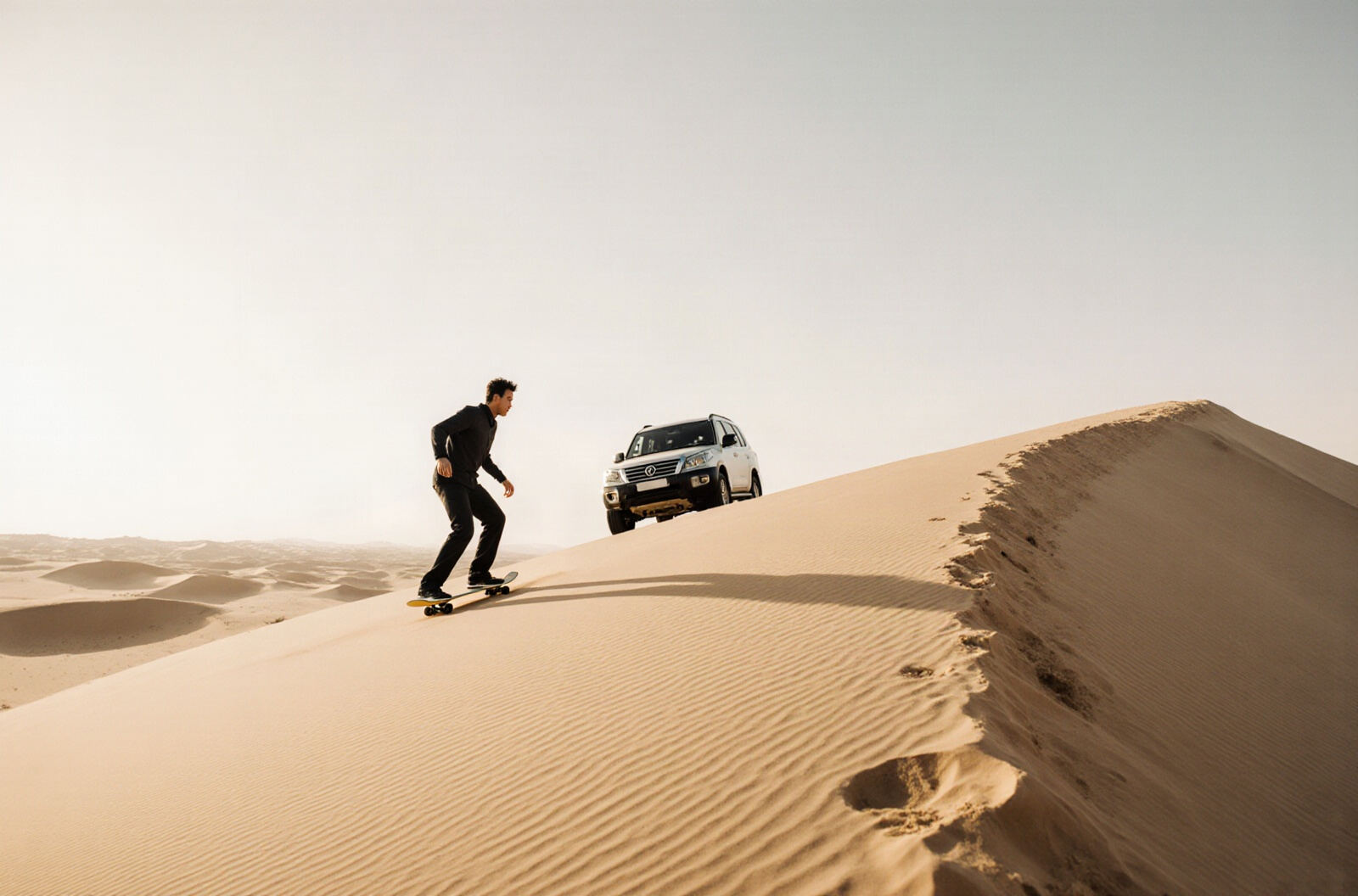
The evening desert safari is the classic: dune drive, sunset, camel ride, barbecue dinner and entertainment at camp. The morning dune bashing tour is shorter and more about the driving and the sandboarding, with cooler sand and softer light for photos. The overnight desert camp is the one I recommend most to people who want to understand the desert, because the magic happens after the day guests leave: silence, stars and a sunrise over the dunes.
What a fair price looks like, and why AED 60 safaris cut corners
A proper evening safari has real costs: a well-maintained four-wheel drive, a licensed driver, fuel, conservation permits, a camp with clean toilets, food prepared safely for hundreds of guests, and insurance. Below about AED 150 per adult, something has to give. Here is what I see on the cheap trips:
- Crowded camps. A thousand people at one camp, a queue for the camel and a buffet that has been sitting out since 6pm.
- Unlicensed or untrained drivers. Freelancers in older vehicles without roll cages, driving dunes they do not know.
- Shared pick-ups. Collecting twenty other guests across the city, so you start 90 minutes late and miss the sunset.
- Hidden extras. Sandboarding, quad bikes, soft drinks and even the camel ride charged on the spot, often doubling the price.
Private pick-up is worth the extra AED 100 to 200 per vehicle if you have children, elderly parents or a hotel far from the desert road. You leave when you are ready, the driver goes straight to the dunes and you reach the ridge in time for the light. Shared tours are fine for solo travellers and couples, as long as the operator caps each vehicle at six guests and gives you a pick-up window of 30 minutes, not two hours.
Ask any operator three questions: is the driver licensed for desert driving, how many guests does the camp hold, and what exactly is included. If the answers are vague, keep looking.
Dune bashing safety: what I check before anyone gets in
Dune bashing is safe when it is done properly, and genuinely dangerous when it is not. Before I put guests in a vehicle, I look for four things.
- A licensed driver with a desert safari permit, not just a normal driving licence.
- A roll cage fitted inside the vehicle and tyres deflated for sand.
- Working seatbelts for every seat, including the back row. Everyone wears one, every time.
- Convoy driving with radio contact, so no car is ever alone on the dunes.
Some people should skip the dune drive: pregnant guests, anyone with back or neck problems, recent surgery or heart conditions, and children under three. Good operators will drive you straight to camp on the flat tracks instead, at no penalty. Tell the driver if you feel sick; it is not a test of courage.
The conservation area and why it matters
Many reputable safaris run inside the Dubai Desert Conservation Reserve, a protected area of around 225 square kilometres, close to five percent of the emirate's land. Inside it you may see Arabian oryx, sand gazelles and, if you are lucky, a desert fox. Only a limited number of licensed operators can work there, vehicles keep to set routes and camp sizes are controlled.
The trade-off is that the dune driving inside the reserve is gentler than the wild rides in open desert. For most families that is a good thing. If you want bigger dunes, the morning tours in open areas give you more adrenaline, but I still insist on the same safety standards.
What to wear and bring
Dress for both heat and cold. In winter, the desert drops to 12 or 14°C after sunset, and at an overnight camp it can be colder still by 4am.
- Loose, breathable clothing that covers shoulders and knees, out of respect for the setting and protection from the sun.
- Closed shoes or sandals you can take off; sand is hot until about 5pm, even in winter.
- A light jacket or scarf from November to March.
- Sunglasses, sunscreen and a refillable water bottle.
- Motion sickness tablets taken 30 minutes before pick-up if you are prone to it.
Ramadan and summer schedules
During Ramadan, safaris still run, but the rhythm changes. Pick-ups are timed so guests reach camp for iftar at sunset, often with dates, water and laban first, then a full meal. Dance shows are usually replaced with quieter entertainment, and alcohol is not served. Many visitors tell me the Ramadan evenings were their favourite: calmer camps, beautiful food and a real sense of the season.
From June to September, daytime temperatures reach 42 to 46°C. Evening safaris start later, with pick-ups around 3:30 to 4pm, and morning tours move earlier, sometimes 6am. Camels may be rested in the hottest hours. Some camps close for summer, so ask which one you are going to.
The hot air balloon alternative
If dune bashing is not for you, the hot air balloon flight is the most peaceful way to see the desert. You lift off around sunrise and drift for about an hour at up to 1,000 metres, often over grazing camels and the reserve. Flights depend on wind and may be cancelled on the morning, in which case you rebook or receive a refund. Book it for the start of your trip so there is room to reschedule.
Photography tips from the dunes
- The best light is the 40 minutes before sunset and the first hour after sunrise. Ask the driver to stop on a ridge at that time, not at camp.
- Shoot into the sun with someone on the crest of a dune for silhouettes; shoot across the dunes for ripples and texture.
- Keep your phone in a zipped pocket during dune bashing and a plastic bag at camp. Fine sand ruins lenses and charging ports.
- Always ask before photographing staff, falconers or other guests, especially women and families.
- On overnight trips, turn off the camp lights for ten minutes and let your eyes adjust before photographing the stars.
A checklist for visiting family
When my own relatives visit, this is what I sort before they arrive:
- Book three or four days ahead in winter, and a week ahead around Christmas, New Year and the Eid holidays.
- Choose private or small-group pick-up if you have elderly guests or young children.
- Confirm the food: halal is standard, but tell the operator about vegetarian, gluten-free or allergy needs in advance.
- Check child prices; most tours charge less for children aged 3 to 11.
- Agree the plan for anyone skipping the dune drive.
- Keep the evening after free; most people are happily tired by 9:30pm.
All our desert tours use licensed drivers, roll-caged vehicles and camps we have checked ourselves, with private pick-up options across Dubai. Compare the evening, morning, overnight and balloon options on our Dubai tours page, or ask our team to combine a safari with a city day for visiting family.
Frequently asked questions
How much should a good desert safari in Dubai cost?
Is dune bashing safe?
Which is better, the evening or the morning safari?
Do desert safaris run during Ramadan and summer?
What should I wear on a desert safari?
Prices and visa notes in our guides are examples at the time of writing. The live price is shown on each holiday page and visa requirements are confirmed before you apply.